Showing posts with label Manufacturing. Show all posts

What is Total Quality Management (TQM)? Total quality management (TQM) is a continuous management process to improve an organization's p...


What is Total Quality Management (TQM)?

Total quality management (TQM) is a continuous management process to improve an organization's processes to give customers the best service. Continuously, TQM detects and reduces errors in manufacturing. Today, customers are astute and aware of how to behave with modern technologies. They always expect organizations to provide their best quality product and services to them. The ultimate target of TQM is customer satisfaction and giving such benefits to organizational members.


All members of the organization represent the total quality management process to build long-term success by focusing on improvements in quality. Organization approaches to streamline supply chain management to identify and minimize errors. There are a few important aspects of TQM, such as communication, collaboration and continuous learning within an organization.


Total Quality Management (TQM) is a collaborative process among the various sections within an organization, which plays different roles including design, engineering, marketing, and more. In TQM, management gives all facilities and manages the right person in the right place providing comprehensive training, and setting clear, achievable objectives.


Total quality management (TQM) is a continuous management process to improve an organization's processes to give customers the best service


History of TQM

In the 1920s, the principles of scientific management swept the U.S. industry and the initialization of quality management in an industrial setting by applying the science of statistics. Also, the process of planning and executing the plan was separated by the business, and the organization used the Hawthorne experiments in the late 1920s to show the impact of participation on worker productivity.


Walter A. Shewhart created a statistical control chart and developed methods for statistical analysis and control of quality in the 1930s.Furthermore, in the 1950s, W. Edwards Deming developed Shewhart’s ideas, and he taught quality control and statistical analysis to Japanese engineers and executives, it can be identified as the origin of TQM. Also, Joseph M. Juran taught quality control methods and published his book, Juran’s Quality Control Handbook. Armand V. Feigenbaum has published his book regarding Total Quality control. Philip B. Crosby promoted zero defects quality improvements for companies at the same time. Therefore, the TQM concept was initiated during the 1950s and 1960s.


Total quality management exhibited its success to organizations worldwide and U.S. companies adopted TQM to increase productivity. Japanese named their approach to enhancing total quality companywide quality control in 1968.


Currently, TQM is the systematic approach to improve customer satisfaction and many businesses apply TQM to give better service to customers. Today organizations follow quality standards and quality management systems.


The 8 fundamental principles of TQM explored

Organizations follow the eight principles of TQM to enhance quality. Those principles are the straight points of TQM to have continuous improvement


Organizations follow the eight principles of TQM to enhance quality. Those principles are the straight points of TQM to have continuous improvement.


Customer focus: -

The customer is the key person for the business and customer feedback is very important to understand customer needs. Therefore, the company needs good customer care service to respond to customer's feedback.


Employee involvement: -

Employee involvement is the key parameter to the success of the TQM. Because All employees should attend to this program with proper training. For that, organizations should increase the training programs and give facilities to enhance their knowledge.


Focus on process: -

Every worker should attend to the TQM process with proper education and knowledge. TQM is a continuous improvement process which analyzed frequently to identify its weaknesses.


Integrated business systems: -

Organizations must integrate all TQM processes to convey important information among the employees to give a better understanding of the process.


Systematic approach: -

TQM activities must be planned and managed well to get better results.


Continual improvement: -

TQM is the continuous improvement process. This improves the quality of the products or services to achieve competitive advantages according to market changes.


Fact-based decision-making: -

The company should analyze the data to accuracy of the decision-making. Also, the collected data should be documented for future reference.


Communication: -

Communication is the way to identify issues and weaknesses of the process. Also, communication improves the relationship between employees and employees feel better when they know the strategies, and methodologies of the process.


Not only that, better communication with customers gives more opportunity to increase the quality. This leads to retaining customers long time.


Importance of TQM


TQM is the systematic process that can lead to organizational success. TQM directly impact customer satisfaction, operational efficiency, employee morale, and the reputation of the organization.


As discussed earlier, customer satisfaction is the most important parameter to the success of the business. The customer is the key person who plays a crucial role in the Centre of the activities. TQM always focus on improving the quality of product or service to meet or surpass customer expectation. TQM is involved in manufacturing, marketing, or customer service to deliver better customer service. Therefore, it leads to a stronger relationship with customers, loyalty and the reputation of the business. TQM enhances customer satisfaction.


The special thing of TQM is the continuous improvement of the process.  In this case, the company regularly evaluate their process to identify the weak areas and TQM encourages it to make the necessary changes. These improvements lead the company to a competitive market. Therefore, TQM drives for continuous improvement.


TQM is the process which is carried out by all employees in the organization. All employees are valuable persons for this process and all have a major responsibility to the success of this program. Given such things, employees feel comfortable and satisfied with their roles. Also, they have been given proper training and guides. Therefore, TQM is important to enhance the employee's morale.


In addition to that, TQM helps to build the company's reputation by giving high-quality service and products to customers. Organizations can directly enter into competitive markets with reputed and branded products and services. Also, TQM manages better resource utilization and high efficiency. Therefore, businesses can achieve higher profits with existing resources.


How to implement TQM


1. It takes time to plan, develop, and implement TQM, and the amount of time required varies depending on the organization.


2. The organization identify their potential values by reviewing its current culture and quality control systems.

3. The management team makes the decision to embrace Total Quality Management (TQM) and creates a TQM master plan.

4. The company lists and ranks the needs of its clients.

5. Management lays out the procedures required to satisfy client demands.

6. To supervise efforts to enhance procedures, management assembles a team.

7. Management begins to add to the process by giving more training and planning.

8. To standardize day-to-day process management, management develops a procedure.

9. The management is always asking the staff for their opinions.

Benefits of TQM


Enhance Customer Satisfaction:

Purpose of the TQM is to increase product or service quality. Good quality products mean higher customer satisfaction, because TQM identifies customer needs through customer's feedback. Therefore, organization can improve product quality continuously.


Improve efficiency: 

TQM is the systematic process that can reduce errors, reworks by utilizing current resources and process effectively. Therefore, it increases overall efficiency.

Fewer cost:

High quality product and service means less defects, less customer return. Therefore, organization can reduce the rework, scrap cost, service cost. This leads to saving more money and increases profit as well.


Enhance employee's morale:

All employees involve for TQM process. They are always updated about process news and provided more training and facilities. Employees feel the ownership and they work hardly to achieve the goal. This collaborative culture enhances the employee's morale.


Better reputation:
Better quality products means higher customer satisfaction. Therefore, TQM helps to get the better reputation from customers and stakeholders.

High quality product and service:
TQM is the continuous improvements process to identify the weakness of the process. Implementing TQM, manufactures can produce high quality product and services.

Grater market share:
Customers are keen to buy high quality products and services. Therefore, TQM increases market share rapidly.

Disadvantages of TQM


Time-Consuming:

TQM is the process that is implemented with continuous training, changing organizational culture. Therefore, it takes a significant time to implement TQM.

Resistance to Change:

Employee resistant to major organization culture change. They feel their jobs insecurity. Therefore, it slows the process and employees should be informed clearly to avoid this.

High Planning and resources time:

Time consuming is significantly higher to planning and resource.

Added costs for implementation:

TQM needs training and infrastructure. Therefore, it adds the significant cost

Dependance on employees:

TQM is the process to involve all employees in organization. Therefore, success of the process depends on the commitment and participation of the employees.


Examples of TQM

Toyota:
Toyota adapt to TQM and Kaizen to achieve higher product and work quality. In 1994, Toyota established the "Toyota Group Executive TQM Training Course" to providing TQM training for new executives.

Amazon:
Amazon implemented TQM to improve the quality of their service because it is customer-centric business e-commerce model. They applied to improve the order processing, website interface and customer care services.

TATA Steel:
TATA steel applied TQM in the 1980s also it was awarded the Deming Application Prize in 2008. TATA steel follows the TQM to identify the customer variation and their requirements. TATA Steel formed the committee " Performance Improvement Committee" to improve continuously.

Apple:
Apple is the biggest high quality electronic items manufacturing company. I phone, I pad, Mac book are the main products of the Apple company. Apple follows TQM process to design, testing, response to customer feedback. They continuously improve the their products to gain the market share and improve the customer satisfaction.

  The impact of manufacturing activities on the global environment is becoming noteworthy, and effective waste reduction and energy conserva...


The impact of manufacturing activities on the global environment is becoming noteworthy, and effective waste reduction and energy conservation technologies are urgently needed in manufacturing processes to achieve sustainable development. The majority of manufacturing processes involve welding processes ranging from traditional to recent manufacturing technologies.


Nowadays, laser welding is the most popular method in the manufacturing industry, and it is used on a wide range of materials and products. Laser welding is the most advanced process. Very low heat input to the weld, low distortion and the ability to weld heat-sensitive components are the advantages of laser welding. The selection of input parameters is critical for obtaining good weld bead geometry.


Laser Beam Welding

The joining technique is one of the vital manufacturing techniques that may be utilized to enhance product design and reduce production costs. Laser beam welding uses gas tungsten arc welding (GTAW). Welding is the process the accurate, reliable, and economical process of joining the two work-pieces together. Also, it has below  characterizations,


Excellent quality

High performance

High precision

High speed

Good flexibility

Minimal distortion


The power density of the laser beam is shown below,


Power density of the laser beam

There are many principal characteristics related to the laser beam welding process (LBW),
Characteristic Note
The high density of energy Minimum distortion
Speedy processing Economical (if fully utilized)
Sudden start/stop Because this process is operated by a CNC programme
Atmospheric pressure welds Compared to arc procedures and electron beam welding
No X-rays are produced Versus welding with an electron beam
No need for filling (Autogenous weld) Failing to remove the flow
Confined weld Minimal distortion
Zone with very little Heat Affected Weld is performed near heat-sensitive materials
It is possible to weld quite precisely Weld can be done from low to high workpiece
Excellent weld bead profile There is no need to clean up
In a magnetic field, a beam cannot stray As opposed to electron beam welding
Without contamination Relying on gas obscuration
Rarely can difficult materials be welded General benefit

Laser Welding Types

CO2 Laser

The process has little heat input and excessive density of energy which is generated using the continuous wave of CO2. This type of laser welding produces a tiny heat-affected zone (HAZ), which cools more speedily with less disfigurement and has a high depth/width ratio for the fusion area.

The primary outcome of the procedure is the CO2 laser strengthens the plume of the welding above the joint by diffusing the power density of the beam, reducing the weld depth and enhancing the weld joint’s surface breadth. Traditionally, CO2 lasers have been used for applications related to automobiles.

There are a number of benefits, 


Quick
Repeatable
Long weld with high-quality
Straight seams
Can weld axisymmetric components


Neodymium yttrium aluminium garnet (Nd:YAG) Laser

The solid-state laser crystal known as neodymium-doped yttrium aluminium garnet, or Nd: YAG, is extensively employed in a variety of applications. This laser gets its name from the dopant (neodymium) and the host crystal (YAG). Recent developments in Nd: YAG laser technology have made it possible to transmit beam energies of at least 2 kW across fibre optic cables. Particularly beneficial for robotic operations where the laser beam must be manipulated around a stationary part.


Nd: YAG laser beam welding is a high energy density and low heat input process that causes a small heat-affected zone (HAZ), which has a high ratio between depth and width for the fusion zone and cools more quickly with minimum distortion.

The solid-state laser crystal known as neodymium-doped yttrium aluminum garnet, or Nd:YAG, is extensively employed in a variety of applications

Fibre Laser Welding

The fibre laser welding process is a modern efficient, versatile and precise method to use to join material together. Fibre laser welding produces a smaller heat-affected zone, therefore, fibre laser welding can reduce the risk of distortion and damage to the surrounding material. This process has a few benefits, such as

High weld quality
Non-contact welding process
Automation capability
Low maintenance

Fiber laser welding process is a modern and efficiency, versatility and precision method to use to join material together


Diode Lasers

Diode lasers have a wavelength that is near to the spectrum of infrared. As an example, it is about 808 nm. On the other hand, the relevant equipment size is quite compact. It is about a box of shoes for laser heads with kW capacities. Diode lasers have a significant advantage over traditional CO2 and Nd: YAG lasers in terms of weight and compact size; in addition to that, diode lasers are mounted to equipment with robot to move easily. Less cooling and higher life are the most important parameters.

Weld defects

Weld pool pores

This happens due to falling down the keyhole quickly. preventing molten metal from flowing into the centre of the keyhole before solidification. They are most common at the weld's root. In some Al alloys, macro-porosity (holes greater than 0.2 mm in diameter) is mostly caused by keyhole formation instability. This weld defect increases when increasing the power density and duration between pulses while performing the weld.

Undercutting

Undercutting is a major defect and it happens when the weld edge is below the weld center. The difference between the maximum and minimum points of the weld surface is considered the undercutting. Undercutting may occur irregularly while increasing the speed of the weld using the pulsed laser.


Humping

This is a longitudinal weld defect and can be identified as Consistent bumping and limitation of the face of the weld. The metal from the weld develops humps above the workpiece's surface. This defect may occur at high velocities and the weld pool shape is important in the formation of the lift of the weld.

The metal from the weld develops humps above the work piece's surface.

Blow-holes

Keyhole instabilities can cause blow-holes to emerge in the top weld bead, most at very high welding speeds.

Cracks

Welding cracks can be seen in the top part of the weld and it forms primarily.

Non-uniformity and surface roughness

The surface roughness of the weld surface depends on the speed of welding, power of the laser beam, duration of pulse, and average peak power density. The optimum speed of the weld helps to obtain the lowest roughness on the surface. Furthermore, roughness rises dramatically while having the very low power of the laser beam.

Limitation of Laser Welding Process


Only applicable to metals and alloys

Less effective on highly reflective materials
Commonly used for materials with moderate thickness
Gaps or misalignment affect negatively weld quality
Cost is high
Require regular maintenance
Need skill operators
safety concerns


Application of Laser Welding Process

Automotive Industry for body, chassis, exhaust system, powertrain components weld

Aerospace Industry for turbine blades and aircraft components weld
Laser diode assembly
surgical instruments and implantable devices manufacturing
Jewelry manufacturing
shipbuilding
consumer electronic manufacturing
Load cell manufacturing process


  The 3D printing process is also called additive manufacturing. This process is used to create three-dimensional objects from a digital des...


The 3D printing process is also called additive manufacturing. This process is used to create three-dimensional objects from a digital design or model. In this process, the material is added thin layer by layer where necessary. However, it involves the cutting and shaping material to create a final product. Due to the flexible characterizations, such as technology's adaptability and ease of use in creating intricate, customized, and complex designs, it is becoming more popular day by day in a variety of industries. Here's how the typical 3D printing process works,

3D printing process is also called as additive manufacturing. This process is used to create three-dimensional objects from a digital design or model

Design:

The design of the desired object is created as a digital 3D model using 3D modelling software or by scanning an existing object using 3D scanners. This file is saved in STL file format.

Slicing:

This process is done to divide the digital model into thin, horizontal layers. A set of instructions (G-code) which is used to guide the 3D printer is created by this software.

Printing:

The 3D printer uses the G-code to add material layer by layer. There are plenty of popular materials for the 3D printing process, such as plastics (like PLA and ABS), metals, ceramics, and even organic materials like living tissue in bioprinting. Depending on the kind of material, the printer's print head or nozzle will either heat or cool it before depositing it onto the build platform or earlier layers.

Cooling and Solidification:

The printed 3D model cools and solidifies after each layer is deposited. Some materials solidify instantly, while other materials may need post-processing operations, such as oven baking or UV curing.

Support Structures:

Sometimes, support structures may be used to prevent sagging or collapsing during the printing process for some model which has an overhang or complex geometries. These supports are usually removed after printing is complete.


Finishing:

Once the object is fully printed, it may require post-processing steps like sanding, painting, or assembly. This is done according to the desired final product.


Types of 3D Printing Technologies

There are few 3D printing technologies. In this section, these technologies are described briefly.


Fused Deposition Modeling (FDM)


Fused Deposition Modeling is one of the most popular 3D printing methods and is widely used in 3D printing technology.  This is referred to as Fused Filament Fabrication (FFF). It is used for melting and extruding thermoplastic materials through a nozzle to build the object layer by layer. FDM is a cost-effective, simple, accessible, and versatile process. However, it has a few limitations, such as layer lines and visible print lines on the surface of the printed object, which may require post-processing to achieve a smoother finish. Mainly it is used for prototyping, hobbyists, and small-scale production.


This process is one of the most popular 3D printing method and widely used in 3D printing technology.  Also this is referred as Fused Filament Fabrication (FFF). It does for melting and extruding thermoplastic materials through a nozzle to build the object layer by layer


Stereolithography (SLA)

Stereolithography is also an additive manufacturing process which is used to build high-precision, detailed, and complex three-dimensional objects with smooth surfaces using liquid photopolymer resin layer by layer. Mainly it is used for prototypes, dental models, jewellery, and custom medical devices. However, SLA 3D printers and the associated resins tend to be more expensive than some other 3D printing technologies like Fused Deposition Modeling (FDM).


SLA is also additive manufacturing process which is used  to build high-precision, detailed, and complex three-dimensional objects with smooth surfaces


Selective Laser Sintering (SLS)


Selective Laser Sintering (SLS) is an advanced additive manufacturing process. It uses a high-powered laser to sinter or fuse fine powdered materials to create strong, durable and complex 3D objects using plastics or metals. SLS is known for its ability to produce parts with high strength and heat resistance for aerospace, automotive, and healthcare industries. 


Selective Laser Sintering (SLS) is an advanced additive manufacturing process. It uses a high-powered laser to sinter or fuse fine powdered materials to create  strong, durable and complex 3D objects using plastics or metals

Digital Light Processing (DLP)

The Digital Light Processing method is similar to Stereolithography (SLA) but uses digital micro-mirror devices (DMDs) and a light source to create highly detailed three-dimensional objects with smooth surfaces. DLP is a speed and precision process for projection displays and 3D printing resin-based objects. It is used for crucial applications, such as dental, jewellery, and custom manufacturing industries.


Digital Light Processing method is similar to the Stereolithography (SLA) but uses digital micro-mirror devices (DMDs) and a light source to create highly detailed three-dimensional objects with smooth surface


PolyJet


Polyjet uses liquid photopolymer resin to build highly detailed, multi-material, and multi-colour parts. This machine cures layers using UV light. It can create products with aesthetics, high levels of visual and functional realism and fine details, such as product design, automotive design, architecture, and the production of consumer goods. However, it may not be the ideal choice for parts requiring high heat resistance or extreme durability.


Polyjet uses liquid photopolymer resin to build highly detailed, multi-material, and multi-color parts.


Binder Jetting


Binder jetting is a method of layer-by-layer construction in which a liquid binder is selectively injected into a powder bed to bind particles together. This method is frequently used to create full-colour items that resemble sandstone.


Binder jetting is a method of layer-by-layer construction in which a liquid binder is selectively injected onto a powder bed to bind particles together


Material for 3D Printing

Plastics: PLA (Polylactic Acid) and ABS (Acrylonitrile Butadiene Styrene), commonly used for FDM printers.

Metals: 3D printing with metals like stainless steel, titanium, and aluminium, mainly used for SLS.

Resins: Photopolymer resins, are mainly used for SLA and DLP printers.

Ceramics

Composites

Biocompatible Materials: Carbon fiber-reinforced plastics

Advantages of the 3D Printing Process


Rapid Prototyping
Cost-effective
Highly customization
Can create complex geometries
Low waste


Limitations of the 3D Printing Process

Less availability of material
Post-processing activities
Less speed for large or highly detailed objects.


Applications of 3D Printing Process


Aerospace: Producing lightweight components for aircraft and spacecraft.


Medical: Creating custom implants, prosthetics, and anatomical models.

Automotive: Rapid prototyping and manufacturing of custom parts.

Dental: Fabricating dental crowns, bridges, and orthodontic devices.

Art and Jewelry: Artists and jewellers use 3D printing to create intricate designs.

Education: 3D printing is used for educational purposes, teaching STEM concepts, and promoting creativity.

Architecture: Architects use it for creating detailed scale models and prototypes.


3D Printing Software


Autodesk Fusion 360
Tinkercad
Blender
Ultimaker Cura
PrusaSlicer

The fundamental process of forging involves applying compressive forces to the workpiece using a variety of dies and tools. Hammering metal ...

The fundamental process of forging involves applying compressive forces to the workpiece using a variety of dies and tools


The fundamental process of forging involves applying compressive forces to the workpiece using a variety of dies and tools. Hammering metal with stone tools is one of the most ancient and significant metalworking processes used to create jewellery, coinage, and other items. Large turbine rotors, gears, bolts and rivets, cutlery, hand tools, countless structural pieces for machinery, aeroplanes, and trains, as well as an assortment of other transportation equipment are examples of forged parts nowadays.


Blacksmiths have historically used a strong hammer and an anvil to accomplish simple forging operations. But most forgings need tools like a press or a powered forging hammer, along with a set of dies.


Depending on the homologous temperature, forging can be done at room temperature (cold forging) or at higher temperatures (warm or hot forging). Because the workpiece material is stronger, cold forging requires higher forces, and the material must be sufficiently ductile at room temperature to allow for the required deformation without cracking. Cold-forged parts have accurate dimensions and a fine surface quality. Although hot forging uses less force than cold forging, the components' surface finish and dimensional accuracy suffer as a result. Additional finishing processes, like heat treatment to change characteristics and machining to get precise final dimensions and a smooth surface, are typically applied to forgings. Precision forging, a key example of net-shape or near-net-shape, can reduce these finishing processes. When a material is forged, it is distorted by an impact load or a steady load. Forging is categorized as press forging or hammer forging depending on the kind of loading. Press forging includes progressive stresses, whereas hammer forging involves impact loads.


Open Die Forging

The workpiece is compressed in this method between two platens. Material flow in a lateral direction is unrestricted. Open die forging is a method that uses relatively simple-shaped dies to create products by gradually deforming them. The bottom die is fastened to the press bed or hammer anvil, and the top die is fastened to the ram. Heat is applied to the metal workpiece above recrystalline temperature, between 1900 and 24000 Celsius. The majority of open-die forging is done using flat dies.
pen die forging is a method that uses relatively simple-shaped dies to create products by gradually deforming them
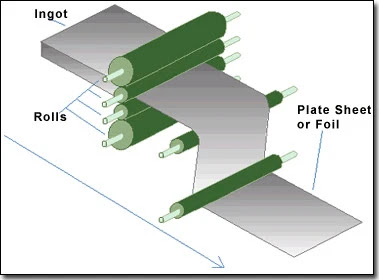
Cogging, fullering, and edging are the three primary categories of open die forging. Cogging: Cogging, also known as drawing out, is a process wherein narrow dies are used to reduce an ingot's thickness to billets or blooms. Convex or concave-shaped dies are used in fullering and edging operations to lower the cross-section. As a result of material distribution, thickness decreases and material elongates. Upsetting is an open-die forging process.

Advantages of Die forging

Disadvantages of Die forging

Products are with greater strength

Less accuracy and tolerances

Fatigue resistance of the parts improved

Reduce voids

Need to machine parts to get the desired accuracy and features.

Capable of producing very large parts which weigh about 136 metric tonnes.

Applications of Open die forging

Less material wastage


Products have fine grain size and continuous grain flow


Closed Die Forging

While impression die forging and closed die forging are very similar processes, closed die forging requires extremely precise control over the initial material removal to prevent flash formation. Otherwise, impression die forging is akin to the procedure. This method works well for large-scale production.
closed die forging requires extremely precise control over the initial material removal to prevent flash formation

Advantages of Closed forging

Disadvantages of Closed forging

Reduce or no machining

No economic to small or short production runs due to the high cost of die

Less or no machining is required for its close tolerances

High setup cost for furnace dies and machines

Dimension with tight tolerances part can be made

Closed die forming is a dangerous process

Better surface finish and mechanical properties


Cost-effective for large production runs


Application of closed die forging

Railway, petrochemical, electrical, lifting and safety systems, industrial and agricultural machinery sectors.

Mining drilling bits, forestry wear parts

Impression Die Forging


The workpiece is pressed between the dies in impression die forging. The necessary shape is formed between the closing dies as the metal spreads to fill the cavities sunk in the dies. "Flash" is the term for a material that is forced out of the dies. As the top hits the anvil, the flash gives the dies some cushioning. The flash surrounding the workpiece is chopped off and thrown away as scrap. A good forging requires the material to fill the dies all the way to the top. It might take multiple hammerblows to accomplish this; one blow might not be enough.

Drop Forging

A closed impression die is used in drop forging to give the component the correct shape. The material inside the die cavity is repeatedly hammered to shape it. Drop hammers are the names of the tools used to deliver the blows.

A drop forging die is made up of two parts. The die's upper half is fixed to the ram, and the lower half is fixed to the machine's anvil. The lower die holds the heated stock. The metal is struck by the ram four or five times in rapid succession, causing the metal to spread out and fill the die cavity completely. The entire cavity is created when the two die halves close.

PRESS FORGING

Press forging dies and drop forging dies are comparable in terms of operation. Unlike drop forging, which shapes the metal through a succession of blows, press forging shapes it through a single, continuous squeezing action. It is achieved by using hydraulic presses to produce this squeezing. As a result of the hydraulic presses operating continuously, the material deforms uniformly throughout the depth. In drop forging, more hammer force is probably going to be transferred to the machine frame, whereas in press forging, the stock absorbs all of the force. Press forging yields a clean impression as opposed to jarred impressions, which are similar to drop-forged components.

Press forging has a smaller draft angle than drop forging. However, deforming requires a larger press capacity, so only smaller components are press forged in closed impression dies. 

The two halves of the die post are fastened to the bottom die to provide the required alignment. This allows the top die to slide only on the post and register the proper alignment. Better tolerance is ensured for press-forged components as a result.

Forming is the one of manufacturing methods which is used to make some objectives. Metal forming is the metalworking process that is used to...


Forming is the one of manufacturing methods which is used to make some objectives

Forming is the one of manufacturing methods which is used to make some objectives. Metal forming is the metalworking process that is used to form metal parts for different shapes through deformation. The material piece is reshaped without adding or removing material.


Hot Forming

The hot hot-forming process is used very frequently to cast industrial products and parts. The raw materials are available form of sheets, tubes, bars or wire.

The hot hot-forming process is used very frequently to cast industrial products and parts. The raw materials are available form of sheets, tubes, bars or wire. In this process, heat is applied to the material to soften. Then, some of the required pressure is applied to get the desired shape of the metal. This process is also capable of forming a variety of complex parts and holds relatively tight tolerances.


Most hot-forming processes are complex due to the involvement of adiabatic heating, die chill and microstructural changes.


Hot hot-forming process is one of sheet forming processes of sheet metal. This process is also known as hot stamping or press hardening. All forming processes are run above the recrystallization temperature of the material. The material recovers and softness during the hot forming process of sheet metal. The hot sheet metal is brought into contact with the hot die and a hot punch is pressed into the die to form the shape and then apply forming pressure for a period.


A direct (one-stage) hot-forming process is commonly used due to forming and part hardening being done in one operation.


Advantages of hot forming

Disadvantages of hot forming

Accurate forming

Burr formation

Complex shapes

Furnaces cause high energy cost

Consistent thickness

The surface finish is poor

Higher surface profile tolerances

The component can wrapped in the worst-case

Resistance to cracking

The surface of the component slightly scaled due to the high working temperature

Good strength


Lower cost


Low spring back


The uses of the hot-forming process are as below, 

In the automobile industry: -


Side members, door reinforcements, sills, roof frames, roof rails, and bumper supports.


Cold Forming

The cold forming process is the metal forging process at bear room temperature or slightly above room temperature.


The cold forming process is the metal forging process at bear room temperature or slightly above room temperature. Forming metal at cooler temperatures may retain or enhance the tensile strength of the material. This process is a high-speed process that allows the manufacture of large amounts of metal-based products in a fast, consistent and cost-effective way.  Cold-formed parts have greater yield, higher tensile strength and superior surface finish when compared to hot-formed parts.


The cold-forming process can be classified into four major groups, such as squeezing, bending, drawing, and shearing. However, higher loads are required to do the cold forming process and deformation is low compared hot forming process. Also, a high degree of manufacturing experience is required to achieve complex geometry parts.


Advantages of Cold-forming

Disadvantages of Cold forming

No heat is required, so low energy is required

Harder tools and dies are needed due to metal is harder

Better surface finish

Low deformation

Superior dimensional accuracy

Material with low ductility cannot be sold formed.

Improve strength properties

Metal surfaces must be clean and scale-free

Contamination problems are minimized

Residual stress may occur

Material savings & elimination of scrap

Higher forces required for deformation

Inexpensive


Big production rate and long life


Material savings & elimination of scrap


Application of the cold forming process,

Fasteners, screws, nuts, bolts, electrical contacts, and rivets


Warm Forming


Warm forming is the metal deform process in which metal is heated to a temperature that maximizes the material's malleability without allowing re-crystallization, grain growth, or metallurgical fracture.


Warm forming is the metal deform process in which metal is heated to a temperature that maximizes the material's malleability without allowing re-crystallization, grain growth, or metallurgical fracture. Warm forming aims to combine the strong points of hot and cold forming. Better surface finishes can be achieved than hot forming. Temperature control is difficult in this process. If more complex parts are formed, precision is low. The warm-forming process is suitable for medium-scale productions.


Advantages of Warm forming

Disadvantages of Warm forming

Reduce tooling loads compared to cold-forming

Lower precision than cold forming


Increased steel ductility

Strict temperature control

Lesser amount of heat energy requirement than hot forming

Greater press loads than hot forming

Lesser thermal shock on tooling than hot forming

Required skilled engineering to design appropriate tooling

Better dimensional control than hot forming


Better precision components than hot forming


In the automotive industry, warm-formed parts are used (Door panels, fenders). In such applications, warm forming of certain aluminium alloys may be cost-effective because of reduced vehicle weight and fuel consumption.